
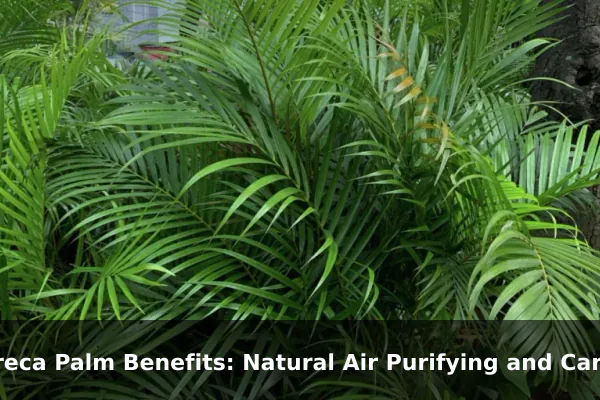
The areca palm is one of the most graceful indoor palms you can grow. Its feather-like fronds, clustered bamboo-like stems, and soft tropical shape make it useful in living rooms, bedrooms, offices, and bright corners that need height without visual heaviness. When people search for areca palm benefits, they often find the same claim repeated everywhere: this plant purifies indoor air. The truth is more useful, and more interesting, than a simple yes or no.
Areca palm can contribute to a healthier-feeling room by adding greenery, visual calm, and a gentle sense of humidity around its foliage. It is also a strong design plant because it softens hard furniture lines and creates a natural privacy screen. However, it should not be treated as a replacement for ventilation, source control, or a properly sized air cleaner. This guide takes a balanced approach: it explains the real areca palm benefits, the limits of natural air purifying claims, and the care tips that help this indoor palm stay full, green, and attractive for years.
What Is an Areca Palm?
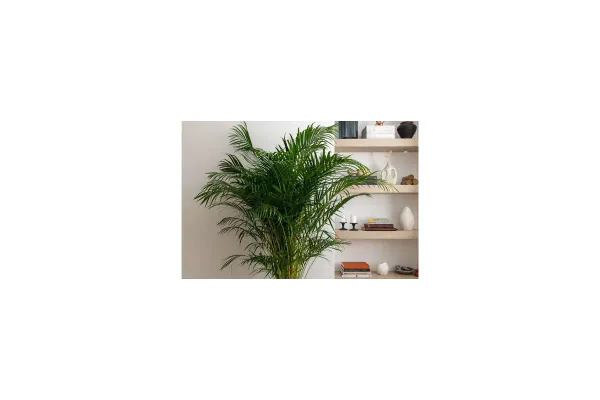
Areca palm is commonly sold as areca palm, butterfly palm, golden cane palm, yellow palm, or bamboo palm. Botanical naming can be confusing because older plant labels often use Dypsis lutescens, while many current horticultural references identify the plant as Chrysalidocarpus lutescens. The important point for home growers is to recognize the plant by its clustering stems, yellow-green leaf stalks, and arching pinnate fronds.
According to university extension profiles and botanical databases such as the North Carolina Extension Gardener Plant Toolbox and Royal Botanic Gardens, Kew’s Plants of the World Online, the areca palm belongs to the palm family, Arecaceae, and is native to Madagascar. Outdoors in warm climates it can become a substantial landscape palm, but as a houseplant it is usually grown in containers as a multi-stemmed indoor specimen.
How to recognize it
A healthy areca palm has narrow leaflets arranged in a feathered pattern along long fronds. The stems often look lightly ringed, similar to slender bamboo canes, which explains one of its common names. Young plants are usually sold as dense pots with many stems, giving an instant full look. This is different from some single-trunk palms that grow slowly into a sparse canopy.
Why correct identification matters
Correct identification matters because care advice can differ between palms. Areca palm enjoys bright indirect light, steady moisture without soggy soil, warm temperatures, and higher humidity. If it is confused with a tougher low-light plant, it may be placed too far from a window and slowly thin out. If it is treated like a desert plant, it may dry down too aggressively and develop brown tips.
Key Areca Palm Benefits for Indoor Spaces
The best areca palm benefits are practical, visual, and environmental in a modest indoor comfort sense. It is not a magic solution for air quality, but it can make a room feel more finished and alive when it is placed and cared for correctly.
It adds soft tropical structure
Areca palm is valuable because it gives height and movement without feeling heavy. The fronds arch outward, so the plant fills vertical space while still allowing light and sightlines to pass through. This makes it useful beside sofas, near reading chairs, behind desks, and in corners where a broad-leaved plant would feel too dense.
It supports biophilic interior design
Biophilic design focuses on bringing natural forms, textures, and living elements into built spaces. Areca palm fits that goal especially well because its foliage has repetition, rhythm, and organic movement. A single large plant can change the mood of a home office or apartment living area, making it feel less sterile and more connected to nature.
It can help a room feel less dry
Plants move water from the potting mix through their roots and release some moisture through leaf surfaces. Areca palm has many leaflets, so a well-watered, actively growing plant can create a slightly fresher feeling near the plant. This does not replace a humidifier in a dry climate, but it can support comfort when combined with proper watering, grouping plants, and avoiding heat vents that strip moisture from leaves.
It works as a natural screen
Because areca palm grows in clusters, it can act as a living screen. Use it to soften a window view, separate a desk from a living area, or add privacy near a balcony door. Unlike a solid divider, the fronds keep the room open and breathable.
It is manageable when conditions are right
Areca palm is often described as low to moderate maintenance. That does not mean it thrives anywhere. It means that once you give it the right light, drainage, warmth, and humidity, care becomes predictable. Most problems come from extremes: too little light, soggy soil, harsh direct sun through glass, dry air, or missed pest inspections.
The Truth About Areca Palm and Air Purification
The phrase natural air purifying is popular in houseplant content, but it needs careful wording. Areca palm, like many plants, participates in normal plant processes: it exchanges gases, supports microorganisms in the root zone, and may interact with some airborne compounds under controlled conditions. That is not the same as saying one potted palm will clean the air in a typical room.
Where the air-purifying claim came from
Many houseplant air-cleaning claims trace back to chamber-based research, including the 1989 NASA technical memorandum available through the NASA Technical Reports Server. That study evaluated leaves, roots, soil, and associated microorganisms as possible ways to reduce certain indoor pollutants in controlled settings. It also explored the concept of moving contaminated air through an activated carbon and plant-root system.
This research was important, but it is often oversimplified online. A sealed test chamber is not the same as a normal home with open doors, changing ventilation, furniture, cooking, cleaning products, dust, outdoor air exchange, and shifting humidity. The study helps explain why plants became associated with indoor air improvement, but it does not prove that a decorative potted areca palm can perform like an air purifier in everyday conditions.
What later research says
A peer-reviewed review in the Journal of Exposure Science & Environmental Epidemiology analyzed potted-plant VOC removal studies and translated results into clean air delivery rate terms. The authors concluded that passive potted plants would need to be present in unrealistically high numbers to match the VOC removal already provided by normal outdoor-to-indoor air exchange in typical buildings. In practical language, a few houseplants may be beautiful, but they should not be your main indoor air strategy.
What actually improves indoor air
The U.S. Environmental Protection Agency guide to air cleaners in the home emphasizes source control, ventilation with clean outdoor air, and appropriate filtration. For particles, a portable air cleaner with a suitable clean air delivery rate can help. For gases and odors, activated carbon or other sorbent media may be needed, and even then performance depends on the amount and condition of the filter material.
So the most accurate answer is this: areca palm may be part of a pleasant, plant-filled indoor environment, but it is not an air cleaner replacement. Grow it for beauty, comfort, greenery, and plant enjoyment. For smoke, fine particles, strong chemical odors, mold moisture problems, or allergy concerns, use the appropriate building and filtration strategies.
Best Places to Keep an Areca Palm Indoors
Placement is one of the biggest factors in areca palm success. This plant wants brightness, warmth, and stable conditions. It dislikes dark corners, cold drafts, and the hot blast of heating vents.
Bright indirect light is ideal
Place areca palm near an east-facing window, a bright north-facing window, or a few feet back from a south or west window where sheer curtains soften intense sun. Bright indirect light helps the plant maintain dense growth and rich color. Too little light often leads to weak, stretched fronds and slow decline. Too much direct midday sun through glass can scorch leaflets.
Living room placement
In a living room, areca palm works well beside a sofa, near a media console, or in an empty corner that receives filtered daylight. Leave enough space around the fronds so people do not brush against them constantly. Repeated contact can bend stems, break leaflets, and make the plant look untidy.
Office placement
In a home office, place the palm where it is visible from your desk but not blocking airflow from electronics or vents. The plant can soften the visual feel of screens and storage furniture. If your office has only weak light, use a full-spectrum grow light for several hours a day rather than forcing the palm to survive in dim conditions.
Bedroom placement
Areca palm can look beautiful in a bedroom if the room has good natural light. Keep it away from cold windows in winter and avoid placing it directly beside a fan, air conditioner, or heater. If humidity is very low, the tips may brown faster in bedrooms with strong climate control.
Areca Palm Care Tips for Healthy Growth
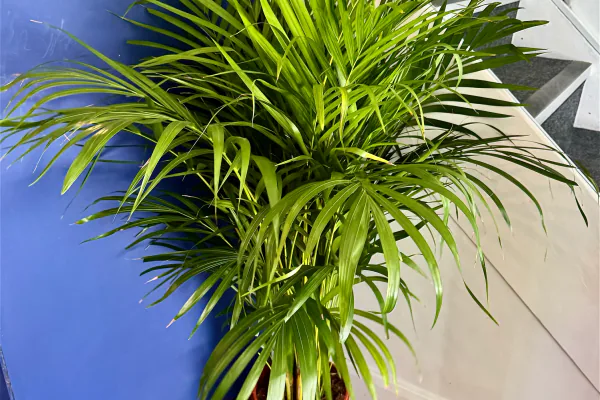
Good areca palm care is about consistency. The plant does not want to sit in water, but it also does not like being dried to the point that the root ball becomes dusty and stressed. Think of its care as warm, bright, evenly moist, and well drained.
Light
Give areca palm bright indirect light for best indoor growth. Rotate the pot every few weeks so all sides receive light and the plant grows evenly. If new fronds are pale, thin, or leaning strongly toward the window, it may need more light. If leaflets turn crispy on the sun-facing side, reduce direct sun exposure.
Watering
Water when the top inch or two of potting mix feels slightly dry. Then water thoroughly until excess drains from the bottom of the pot. Empty the saucer after watering so the roots are not sitting in stagnant water. During active growth, the plant may need water more often. In cooler months or lower light, it may need less.
- Too dry: crispy brown tips, folded leaflets, lightweight pot, dry soil pulling away from the pot edge.
- Too wet: yellowing fronds, sour-smelling soil, fungus gnats, soft stems, or blackened roots.
- Just right: lightly moist soil below the surface, firm stems, and steady new growth.
Humidity
Areca palm prefers higher humidity than many homes provide, especially in heated or air-conditioned rooms. A humidifier is more effective than occasional misting. You can also group compatible houseplants together or place the pot on a pebble tray that keeps the pot above the waterline. Do not let the pot sit in the water, because that can keep the root zone too wet.
Soil and drainage
Use a well-drained potting mix with organic matter and aeration. A standard indoor potting mix can work if it drains freely, but many growers improve it with perlite, fine bark, or pumice. The container must have drainage holes. Decorative cachepots are fine, but always check that water is not collecting unseen inside the outer pot.
Temperature
Areca palm grows best in warm indoor conditions. Avoid cold drafts, frosty windows, and sudden temperature swings. If you move the plant outdoors for summer, keep it in shade or filtered light first, then transition gradually. Bring it inside before nights become cool.
Fertilizing
Feed lightly during spring and summer with a balanced houseplant fertilizer at the label rate or weaker. Overfertilizing can burn roots and worsen brown tips. If you see white mineral crust on the soil surface, flush the pot with water and allow it to drain well, or refresh the top layer of mix.
Pruning brown tips
Brown tips are common on areca palms and do not always mean the plant is dying. They can result from dry air, inconsistent watering, mineral buildup, fertilizer excess, or old foliage. Trim only the brown portion with clean scissors, following the natural shape of the leaflet. Avoid cutting into healthy green tissue more than necessary.
Repotting
Repot every two or three years, or when roots are crowded and water runs through too quickly. Choose a pot only slightly larger than the current one. A pot that is much too large holds excess moisture, which increases the risk of root rot. Repotting is best done during active growth so the plant can recover more quickly.
Common Problems and How to Fix Them
Most areca palm problems are signals, not mysteries. Look at light, watering, humidity, pests, and root health before making drastic changes.
Brown leaf tips
Brown tips are the most common complaint. Start by checking humidity and watering consistency. If the air is very dry, increase humidity. If the soil swings from soggy to bone dry, adjust your watering rhythm. Mineral buildup from hard water or too much fertilizer can also contribute. Use filtered water if your tap water is high in salts, and flush the soil occasionally.
Yellowing fronds
Older fronds naturally yellow as they age, but several yellow fronds at once may indicate overwatering, poor drainage, low light, or nutrient stress. Check the root zone before adding fertilizer. If the soil is wet for many days after watering, improve drainage and reduce frequency.
Root rot
Root rot is usually caused by soggy soil, a pot without drainage, or watering too often in low light. Symptoms include limp growth, yellowing, a sour smell, and dark mushy roots. Remove the plant from the pot, trim dead roots with clean tools, repot into fresh well-drained mix, and water more carefully afterward.
Spider mites
Spider mites are common on indoor palms, especially in dry rooms. Look for fine webbing, speckled leaflets, and dull foliage. Rinse the fronds thoroughly, including undersides, then treat with insecticidal soap or horticultural oil according to the product label. Repeat treatments are often needed because mites can rebound quickly.
Mealybugs, scale, whiteflies, and thrips
Areca palm can also attract mealybugs, scale, whiteflies, and thrips. Isolate affected plants, wipe visible insects from stems and leaf bases, and treat with an appropriate houseplant-safe product. Always follow label directions, especially in homes with children or pets. Improving light, airflow, and plant vigor can make pest management easier.
Leaf scorch
Leaf scorch appears as bleached, crispy patches, often on the side facing the strongest window. Move the plant slightly away from harsh direct sun or add a sheer curtain. Scorched tissue will not turn green again, but new growth should look better once the light is corrected.
Is Areca Palm Safe for Homes With Pets or Children?
Safety information should be handled carefully because plant parts, pesticides, potting soil, and individual sensitivities all matter. The North Carolina Extension profile tags areca palm as non-toxic for cats, dogs, and horses, which makes it a popular choice for pet-aware indoor plant lists. Still, it is wise to prevent pets from chewing fronds because any plant material can cause stomach upset in some animals.
For children, the same practical rule applies: do not encourage chewing, digging in soil, or handling fertilizer and pest products. Extension guidance also notes low-severity poison characteristics for humans and specifically warns that the heart-of-palm, meaning the terminal bud or young leaf bud, should not be eaten. In a normal houseplant setting, the bigger everyday risks are tipped pots, spilled soil, and pesticide misuse rather than casual contact with leaves.
- Place large pots where they cannot be pulled over easily.
- Use heavy planters or stable stands for tall specimens.
- Keep fertilizers, systemic pesticides, and sprays out of reach.
- Call a veterinarian, pediatrician, or poison control service if a child or pet eats a significant amount of any houseplant.
Areca Palm vs. Other Indoor Air-Friendly Plants
Many indoor plants are marketed as air-friendly, including snake plant, peace lily, pothos, spider plant, and rubber plant. The better comparison is not which plant purifies air best in a real home, because passive potted plants are limited for that purpose. A more useful comparison is care style, appearance, and room fit.
Areca palm vs. snake plant
Snake plant is more tolerant of low light and missed watering. Areca palm needs brighter light and more consistent moisture. Choose snake plant for narrow, dry, low-maintenance spots. Choose areca palm when you want height, softness, and a tropical canopy effect.
Areca palm vs. peace lily
Peace lily has broad leaves and seasonal white spathes, while areca palm provides airy texture and vertical screening. Peace lily often wilts dramatically when thirsty, which makes watering cues obvious. Areca palm is subtler and may show stress through brown tips or gradual yellowing.
Areca palm vs. pothos
Pothos is a trailing or climbing vine that works on shelves, hanging planters, and bookcases. Areca palm is a floor plant for structure. They can complement each other well: pothos adds trailing lines, while areca palm fills vertical space.
Areca palm vs. bamboo palm
The name bamboo palm is sometimes used loosely, which causes confusion. Some growers use it for areca palm because of its cane-like stems, while others use it for Chamaedorea seifrizii. Check the botanical label when buying. If you want the classic golden-stemmed, feathery, clustering palm discussed in this article, look for areca palm or Chrysalidocarpus lutescens.
How to Choose a Healthy Areca Palm Before You Buy
Starting with a healthy plant prevents many future problems. Because areca palms are often sold as lush, multi-stemmed pots, it is easy to focus only on fullness. Look closer before purchasing.
- Inspect the undersides of leaves. Avoid plants with webbing, sticky residue, cottony clusters, or moving insects.
- Check the soil. It should be slightly moist or moderately dry, not sour, waterlogged, or covered in fungus gnats.
- Look for balanced color. A few brown tips are normal, but widespread yellowing or crispy fronds suggest stress.
- Lift the nursery pot. Roots should not be bursting heavily from drainage holes, and the pot should not feel like a block of dry roots with no soil left.
- Choose the right size. A slightly smaller healthy plant usually adapts better than a large stressed one.
After bringing it home, quarantine the plant for a couple of weeks if you already own other houseplants. This gives you time to catch pests before they spread.
Simple Areca Palm Care Schedule
A schedule helps, but always adjust it to your actual room conditions. A palm in bright warm light dries faster than one in a cooler room. Use this as a practical starting point rather than a strict rule.
- Weekly: Check soil moisture, inspect leaves for pests, and rotate the pot slightly.
- Every two to four weeks: Wipe dusty fronds gently with a damp cloth or rinse in the shower if the plant is easy to move.
- Spring and summer: Fertilize lightly during active growth and monitor water needs more closely.
- Fall and winter: Reduce fertilizer, watch for dry air, and avoid overwatering in lower light.
- Every two or three years: Repot if the plant is rootbound or the potting mix has broken down.
Final Takeaway: A Beautiful Plant, Not an Air Cleaner Replacement
Areca palm deserves its popularity, but for better reasons than exaggerated air-purifying claims. Its real benefits are visual softness, tropical texture, natural screening, a gentle contribution to plant-filled comfort, and the satisfaction of growing a living indoor palm. It can make a room feel calmer and more cared for, especially when placed in bright indirect light and kept evenly moist in a well-drained pot.
The air purification story is more nuanced. NASA’s chamber research helped spark interest in houseplants and indoor pollutants, but later analysis and EPA guidance show that real indoor air quality depends much more on reducing pollutant sources, ventilating when appropriate, and using properly selected filtration when needed. In other words, grow areca palm because it is beautiful and beneficial as a houseplant, not because you expect it to replace an air cleaner.
If you give it warmth, light, humidity, drainage, and routine pest checks, the areca palm can become one of the most rewarding indoor plants in your home. It brings the look of a small tropical grove indoors while reminding us that the best plant benefits are strongest when science, care, and realistic expectations work together.
Official references
- NASA Technical Reports Server – Interior Landscape Plants for Indoor Air Pollution Abatement – Primary source for the original NASA chamber-based houseplant air-pollution study; useful for explaining where air-purifying claims came from and their sealed-environment limits.
- U.S. Environmental Protection Agency – Guide to Air Cleaners in the Home – Authoritative indoor air quality guidance for source control, ventilation, filtration, CADR, VOCs, and what actually improves indoor air in homes.
- Journal of Exposure Science & Environmental Epidemiology – Potted plants do not improve indoor air quality – Peer-reviewed review quantifying why passive potted plants have negligible practical VOC-removal impact in typical buildings compared with normal air exchange.
- North Carolina Extension Gardener Plant Toolbox – Chrysalidocarpus lutescens – University extension profile for areca palm identification, indoor care, light, humidity, soil, pests, toxicity notes, and horticultural context.
- Royal Botanic Gardens, Kew – Plants of the World Online (powo.science.kew.org) – Primary botanical database to verify accepted scientific naming, synonyms, native range, and distribution for areca palm before making plant-identity claims.
